
Black Friday 2025: Balancing Business, Brand Value & the Bottomline
A data-driven guide for sustainable fashion founders to thrive in the world’s biggest sale season — without compromising purpose.
Mouneka Karnal
11/30/20253 min read
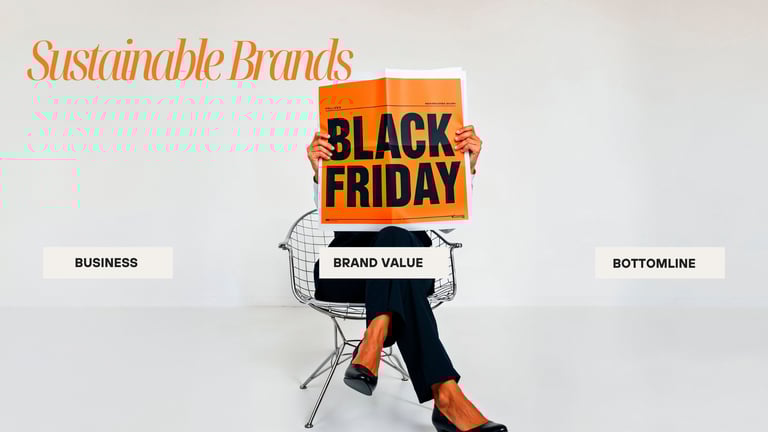

The Double-Edged Sword of Black Friday
Every November, shopping carts overflow as Black Friday ignites a global shopping frenzy. What began as a U.S. retail ritual has exploded into a worldwide event, pulling in billions — and now, it’s reshaping the sustainable fashion conversation.
For purpose-driven founders, the dilemma is real: Can you tap into this revenue rocket without fueling overconsumption, eroding your ethical edge, or harming the planet?
As a conscious brand consultant, I’ve guided dozens of founders through this tension. The truth is — you can. But only if you design your participation with intention. Let’s unpack the global data, hidden costs, and the sustainable playbook for 2025.
What the Numbers Say: Black Friday’s Global Grip — and India’s Surge
Black Friday 2025 didn’t disappoint in scale.
In the U.S., online sales hit a record $11.8 billion, up 9.1% from 2024 — driven by AI-personalized offers and Gen Z’s early-morning shopping rush (45% of pre-9 AM traffic).
Globally, Cyber Week spending reached $314.9 billion, with Black Friday alone generating $78 billion, marking a 5% year-over-year lift despite cautious consumer sentiment.
In India, the retail surge was unmistakable. Platforms like Flipkart and Myntra reported 20–25% sales growth, while D2C brands saw 1.2–1.4× traffic spikes and 150% more add-to-carts. Gross Merchandise Value (GMV) rose 24%, bridging Diwali’s festive spending with winter wardrobes.
Insight: Black Friday is no longer an American import. In India, it’s becoming a core part of the holiday economy — and for sustainable brands, ignoring it means missing visibility and revenue that drive 30–50% of yearly sales.
The Hidden Costs: When Sales Eclipse Sustainability
The highs come with heavy lows. Fashion’s e-commerce return rates hover between 24–40%, far above the retail average. Each return generates additional transport, packaging waste, and emissions.
-Returns alone produced 15 million tonnes of CO₂ in 2024.
-And nearly 80% of impulse Black Friday purchases are worn fewer than five times before disposal.
For ethical brands, aggressive discounting risks “fast-fashion fatigue.” Conscious consumers (20% of global buyers) now associate deep discounts with overproduction and compromise.
In short: short-term wins can quietly erode long-term trust — and undo years of storytelling around craftsmanship, longevity, and impact.
How to Play Smart: Strategies for Values-First Participation
Black Friday doesn’t have to mean greenwashing or guilt. Here’s how to reclaim the narrative:
Clear Surplus, Not Conscience
Sell only what already exists — repurpose or move old inventory, not create new demand-driven production.Circular Perks Over Discounts
Offer trade-ins, resale credits, or repair vouchers instead of steep markdowns. Circular sales can reduce emissions by up to 75% compared to new production.Educate Your Audience
Use this high-traffic moment to tell your brand’s deeper story: run “Buy Less, Buy Better” campaigns and show real data — product life cycles, impact dashboards, and craftsmanship value.Cap Discounts to Preserve Value
Keep discounts moderate (10–20%) and tie them to loyalty programs or limited archival pieces. This maintains price integrity and discourages impulse buys.
Smarter Returns, Lower Footprint
Encourage virtual try-ons or pay-for-return models to reduce unnecessary shipments and landfill waste.
My Playbook for Founders: Balancing Business, Brand Value & Bottomline
Here’s the triad I use when consulting founders across India and global sustainable markets:
Inventory Audit First
Identify and move ethical surplus — think handloom edits, khadi remnants, or slow-moving collections — to unlock cash flow without waste.Story Over Slash
Focus on storytelling, not price cutting. Transparent communication drives 42% more trust and higher long-term loyalty.Measure More Than Money
Track meaningful metrics: customer retention, wears-per-garment, NPS, and waste diverted. Aim for a 30% lift in repeat engagement over pure revenue spikes.Localize the Ethos
Blend Diwali’s spirit of mindful gifting with “Green Friday” messaging. 56% of Indian shoppers now prefer sustainable products.
This is your founder advantage — mastering the art of balancing Business, Brand Value & Bottomline with intention and integrity.
Redefine the Rush
Black Friday isn’t a war between profit and purpose — it’s a mirror of how well your brand can hold both. The real challenge is not avoiding the sale, but showing up consciously.
Approach this season with clarity: Educate. Circularize. Endure.
Turn sale season into storytelling season.
👉 What’s your 2025 strategy?
Reply to this newsletter or book a free 15-minute strategy call to align your Business, Brand Value & Bottomline for the year ahead.
References
Adobe Digital Insights (Nov 2025). Black Friday U.S. Online Sales Report.
Future Market Insights (2025). Global Black Friday Market Outlook.
Financial Express (Nov 2025). Black Friday Sales Surge in India.
Inside Climate News (2024). The Environmental Impact of Black Friday.
Ellen MacArthur Foundation (2024). Circular Economy & Retail Impact.
McKinsey & BoF (2025). State of Fashion Report.
Edelman Trust Barometer (2025). Brand Transparency & Consumer Trust.